Free Worldwide Shipping.

How to Style a Vintage Nightgown for Daytime Wear
Bring a vintage nightgown into your daytime wardrobe with considered layers, suitable coverage and simple accessories.

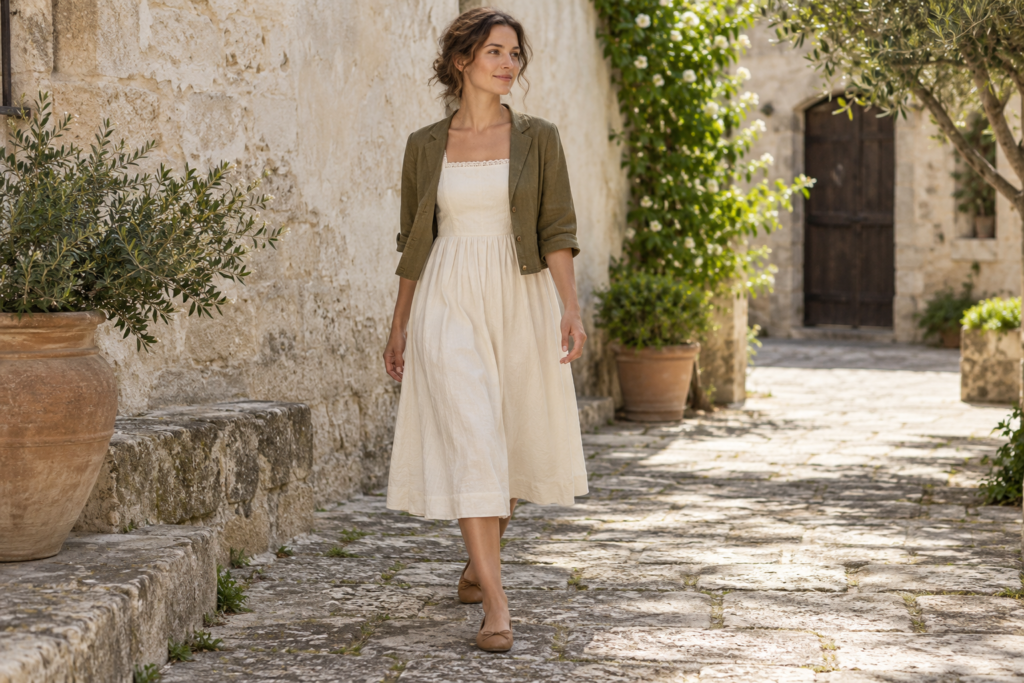
A vintage nightgown can work as a daytime outfit when its coverage, length and construction suit being worn outside. Start with an opaque dress or a suitable slip, add one structured layer, and choose shoes that make sense for the occasion. The aim is to let the nightgown's lace, sleeves or gathered skirt provide the interest while the rest of the outfit stays simple. That balance is especially useful with romantic cotton styles: they already have plenty of character, so a complete change of accessories is often more effective than adding more decoration.
How intimate clothing became visible fashion
The boundary between underwear and outerwear has supplied fashion with more than one familiar silhouette. The slip dress, derived from the appearance of an underslip, commonly uses narrow straps and a bias cut. Its prominence in the 1990s was part of fashion's interest in underwear worn as outerwear. A garment associated with private dressing became part of a public outfit.
A cotton nightdress offers a different silhouette from that close-draping slip shape, but the styling question is similar: what makes the garment work in its new setting? Our approach here is practical rather than a recreation of a particular decade. You can borrow the contrast between delicate fabric and everyday layers without copying a runway look or needing a special occasion.
Start with the vintage nightgown itself
Before choosing a jacket, put the garment on in daylight. Stand near a window, turn around and sit down. Look at the skirt, underarms and any lace inserts separately. An opaque bodice does not guarantee the same coverage through the rest of the dress, particularly where the fabric is stretched or strongly backlit.
A full slip can be useful beneath a pale cotton nightdress. A full slip can reduce show-through and help an outer garment hang smoothly. For this outfit, choose a slip that stays below the neckline and above the hem, then check that the two layers move together comfortably.
Next, test the practical details. Does the front opening remain closed when you sit? Can you reach forward without pulling at the sleeves? Is the hem clear of your shoes? These checks tell you more about daytime suitability than the name on the label. If the dress needs constant adjustment, choose another base rather than building an outfit around that inconvenience.
Give your vintage nightgown a little structure
The easiest way to style a vintage nightgown is to introduce one clear outline around it. A waist-length jacket can define where the upper body ends without fastening a belt over gathers. A longer, straight coat can frame a full skirt, provided the two hems do not catch each other as you walk.
Try a plain linen jacket with an embroidered dress, or a simple denim jacket with a lace neckline. These are styling suggestions, not rules about what must match. The useful contrast is between the soft, detailed garment and an outer layer with cleaner edges. If both pieces have ruffles, elaborate cuffs and decorative fastenings, the original nightgown details may become difficult to see.
Sleeves deserve particular attention. A jacket that fits over a T-shirt may be too narrow for gathered nightdress sleeves. Try the layers together, bending your elbows and lifting your arms. For a full-sleeved Victorian nightgown, an open waistcoat can be an easier option because it leaves the sleeves free.
Three ways to build the outfit
Use the combinations below as starting points, adjusting them to your wardrobe and the weather.
| Starting piece | Layer to try | Footwear | Detail to check |
|---|---|---|---|
| Plain or lightly embroidered midi nightgown | Short linen jacket | Flat sandals or loafers | Skirt coverage in daylight |
| Lace-trimmed nightgown with generous sleeves | Simple open waistcoat | Ankle boots or flats | Comfortable arm movement |
| Short ruffled nightgown | Straight trousers underneath | Simple trainers or flats | Hem volume over the trousers |
The last combination treats a shorter vintage nightgown as a tunic. Keep the trousers comparatively plain so the ruffle does not compete with another busy hem. Check the outfit while seated as well as standing; fabric that looks balanced in a mirror may bunch once several layers meet at the hips.
Let one decorative feature lead
Choose the detail you most want to show. If it is the neckline, keep a jacket open and avoid a necklace that tangles visually with the lace. If it is a shaped cuff, choose an outer layer with sleeves that can accommodate it. An embroidered bodice usually needs less added jewellery than a completely plain front.
The embroidered cotton nightgown has a floral bodice, square neckline and bishop sleeves, giving you several possible focal points. For a restrained outfit, keep the jewellery small and choose an uncomplicated bag. Check the product measurements and coverage before deciding whether that particular piece suits your daytime plans.
A different approach suits the short cotton ruffle nightgown, whose listing describes an above-knee hem and short puff sleeves. Its shorter shape makes the trouser-layering idea worth considering. Neither example needs additional lace accessories to make its design visible.
Keep the setting in mind
A vintage nightgown outfit for a garden lunch can be softer and more relaxed than something intended for a workplace. Think about the actual day: walking distance, seating, weather and any dress requirements. Shoes should support those plans rather than merely complete a photograph.
For a Victorian nightgown with a generous skirt, test a small cross-body bag before leaving. A heavy bag may gather the fabric beneath its strap or hide the bodice detail. A hand-held bag is another option if that happens. If you want a garment designed expressly for outdoor dressing, compare the site's dresses before committing to a sleepwear piece.
An outfit built around a detail you enjoy
The strongest vintage nightgown outfit usually starts with one feature you already love, then solves coverage and proportion around it. The sleepwear collection at Victorian Couture offers different starting shapes. Choose the garment first, test it in daylight, and add only the layers that make it comfortable and convincing for your day.
Frequently Asked Questions
Can I wear a vintage nightgown without a belt?
Yes. A short jacket or open waistcoat can give the outfit definition while leaving the waist loose. Try that first if a belt makes the gathered fabric bunch uncomfortably.
What colour slip works under a white nightdress?
Start with a shade close to your skin tone and test it under the actual dress in daylight. White can also work, but its outline may be more noticeable beneath a fine outer fabric.
Can a vintage nightgown work with trainers?
Try simple trainers with a clean shape and little extra detailing. They can suit a casual outfit, especially when the jacket or bag also feels everyday rather than formal.
What if the neckline shows my underlayer?
Choose a lower-cut underlayer or make its visibility deliberate with a plain, coordinated camisole. Avoid repeatedly pulling one neckline beneath the other, which usually becomes uncomfortable.
Do I need matching accessories?
No. Repeating one colour or keeping the accessories similarly simple is enough. A lace bag, lace shoes and lace jewellery can distract from the detail that made you choose the dress.
How should I care for the garment after wearing it outside?
Check the hem and any areas rubbed by a bag or jacket, then follow the garment's care label. Treat the body fabric and decorative trim as one item when choosing the washing method.